 BlackMythWukongZone
Black Myth: Wukong Isn't a Full Soulslike: 10 Major Differences
Black Myth: Wukong defies Soulslike expectations with faster combat, linear world design, and a single weapon mastery system.
Like a lot of players, I went into Black Myth: Wukong fully expecting another brutal, methodical Soulslike. It had all the surface markers: big bosses, dodge-heavy combat, checkpoints, and a dark mythic world. But after spending time with it and looking back at how Game Science framed the game before launch, I have to admit—it's not entirely the game I thought it would be. In fact, Black Myth: Wukong deliberately breaks several Soulslike conventions. So, what makes it different? Let's walk through the major departures.
Faster Combat
The traditional Soulslike game that my mind conjures up is one that revolves around slower, methodical combat. You circle an enemy, wait for an opening, and commit to an attack with real weight. Black Myth: Wukong throws a lot of that caution out the window. Everything from regular movement to basic attacks to the more high-flying abilities feels faster and more bombastic. It's less about patiently waiting and more about staying mobile and aggressive. Does that mean it lacks depth? Not at all—it just asks you to read the flow of combat in a different way.
More Linear World Design
Most Soulslikes love a winding, interconnected world full of shortcuts, hidden paths, and secrets. Elden Ring went fully open world, but even the older Dark Souls games pushed you to explore every nook. Black Myth: Wukong, though, heads in a different direction. It's much more mission-based. Sure, there are branching paths, secrets, and hidden bosses, but the overall structure is far more guided. You won't spend hours getting lost in a sprawling labyrinth. For me, that's a refreshing change of pace, though I can see some Souls purists missing the environmental puzzle-box feel.
One Weapon, Multiple Masteries
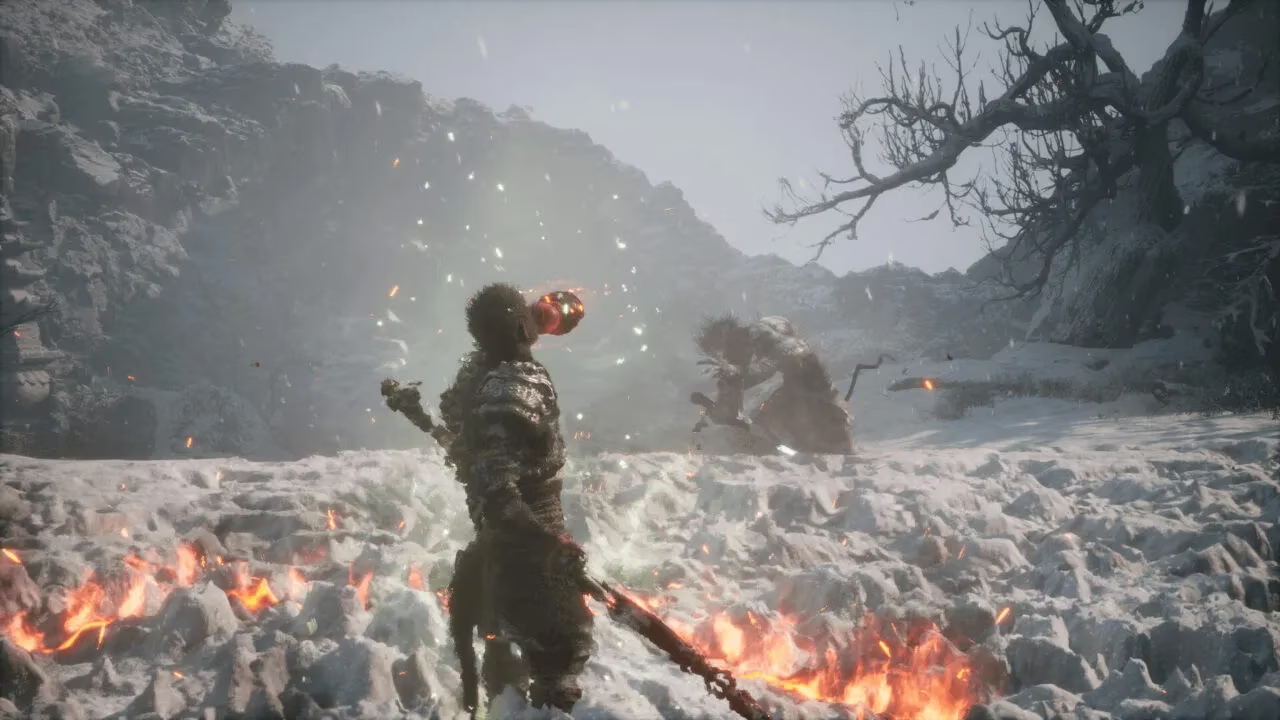
Here's a big one: in most Soulslikes, build diversity often comes from experimenting with different weapon types—swords, axes, spears, you name it. In Black Myth: Wukong, you're locked into one main weapon type: Wukong's staff. That might sound limiting, but it's actually closer to Bloodborne or Sekiro. Instead of offering a menu of weapons, the game challenges you to master a very specific combat style. The depth comes from your movement, timing, and abilities rather than from swapping gear. If you love tinkering with dozens of weapons, this might sting. But if you enjoy mastery, it's a smart focus.
Limited Progression and Color-Coded Loot
Black Myth's more curated approach also shows up in progression. Instead of dumping points into a dozen different stats like typical Souls games, you unlock upgrades across three distinct skill trees. Each tree handles a specific category of upgrades, which means fewer gameplay options overall—but they're more intentional. You can also open the menu and spend points whenever you want, not just at a checkpoint. That alone is a huge departure. And the gear system? Loot is color-coded by rarity. It feels more like an action RPG in that regard, and honestly, it makes comparing equipment a lot faster.
De-emphasized Blocking
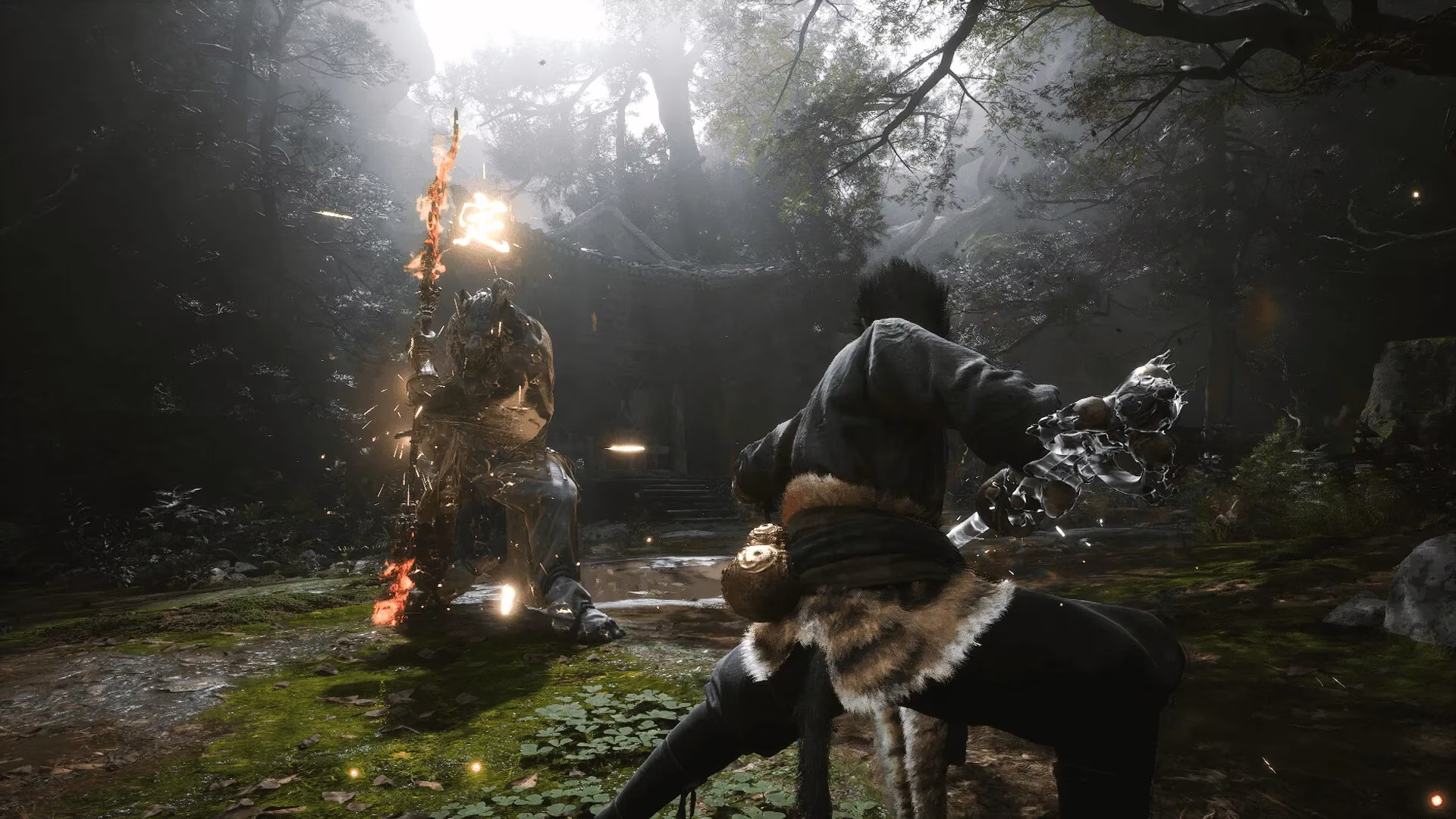
Blocking is a core part of most Soulslike combat, but Black Myth: Wukong largely pushes it aside. The game is built around dodging instead. That makes sense given the faster pace, but there's a catch: you can't spam dodge forever. After three quick dodges, you're hit with a lengthy recovery window. On the flip side, perfect dodges are absolutely a thing, so if you want to play like a deflection master, you can. Still, the flow of combat feels very different from holding up a shield or parrying with a sword. Is one better than the other? For me, it depends on the day, but I appreciate that Black Myth commits to its own rhythm.
Punishment for Death
Soulslike death punishment is almost a sacred cow: you die, you lose all your unspent XP, and you have to trek back to your corpse. Black Myth: Wukong does punish death, but not with that same cruel efficiency. When you fall, you only lose a portion of your XP. That small change makes grinding feel way less stressful and keeps the game from being a total anxiety machine. Some might call it soft, but I think it keeps the challenge focused on the fight rather than the walk back. And if you're worried about losing progress, trust me—it's still enough to make you respect every encounter.
Approach to Difficulty
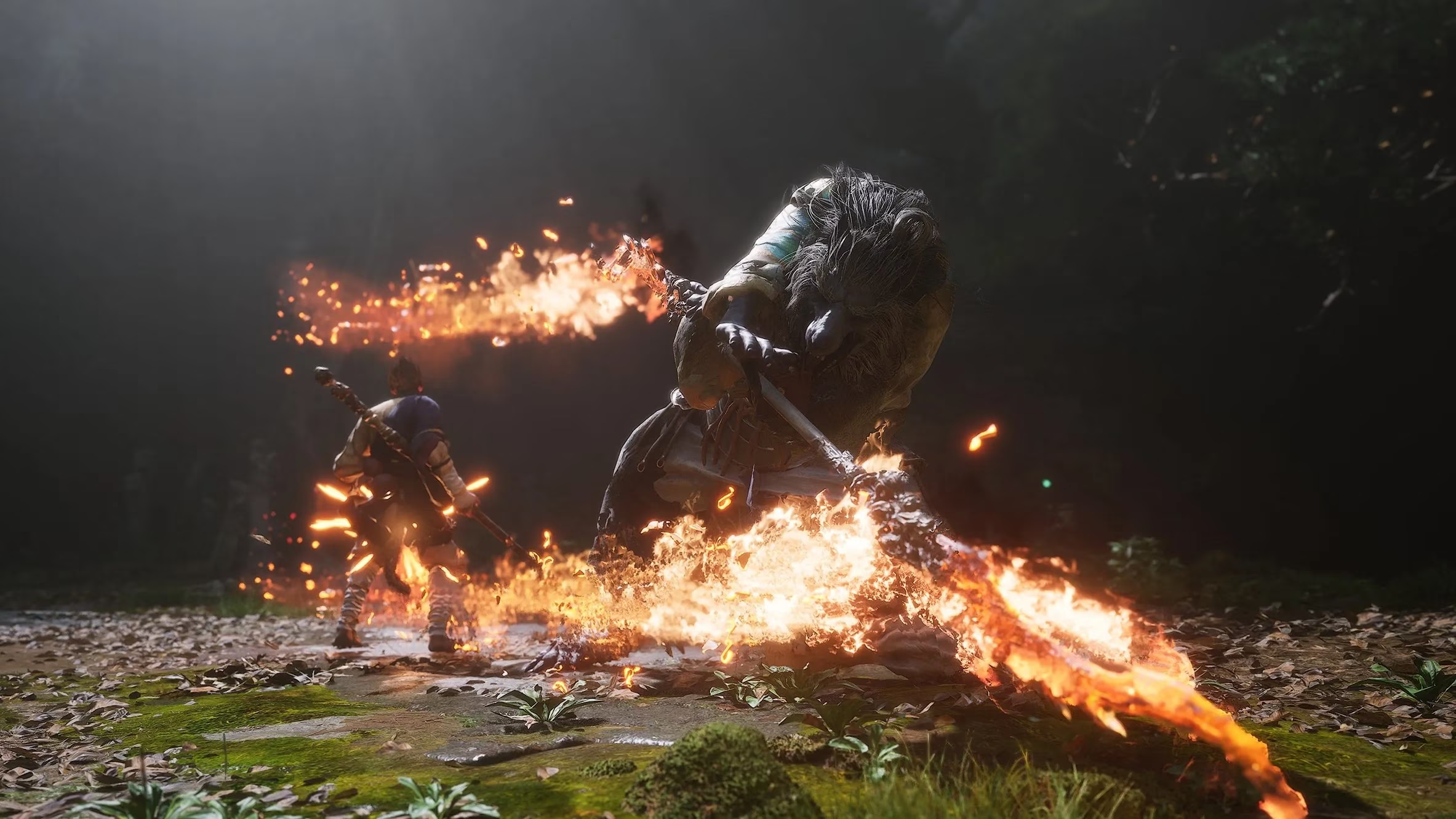
Game Science has made it clear that Black Myth: Wukong is challenging, especially in its boss fights, and there are no difficulty levels to hide behind. But at the same time, it doesn't feel like a relentless gauntlet designed to break you. The game is tough when it needs to be, but it also gives you room to breathe. So, is it easier than Dark Souls? In some ways, yes—especially with the reduced death penalty. In others, no, because the boss designs still demand precise timing. It's a different kind of difficulty, one that wants you to struggle and succeed rather than just survive.
You Can Pause
I know, this sounds almost silly to call out, but in the Soulslike genre, not being able to pause has somehow become a feature. If you've ever needed to answer the door or stop a child from touching the stove mid-boss fight, you know how annoying that is. Black Myth: Wukong lets you pause whenever you want. That's it. That's the difference. But it's a quality-of-life win that makes the game feel so much more approachable without sacrificing tension. Can you imagine a Soulslike where you can pause? Now you don't have to.
Transformations
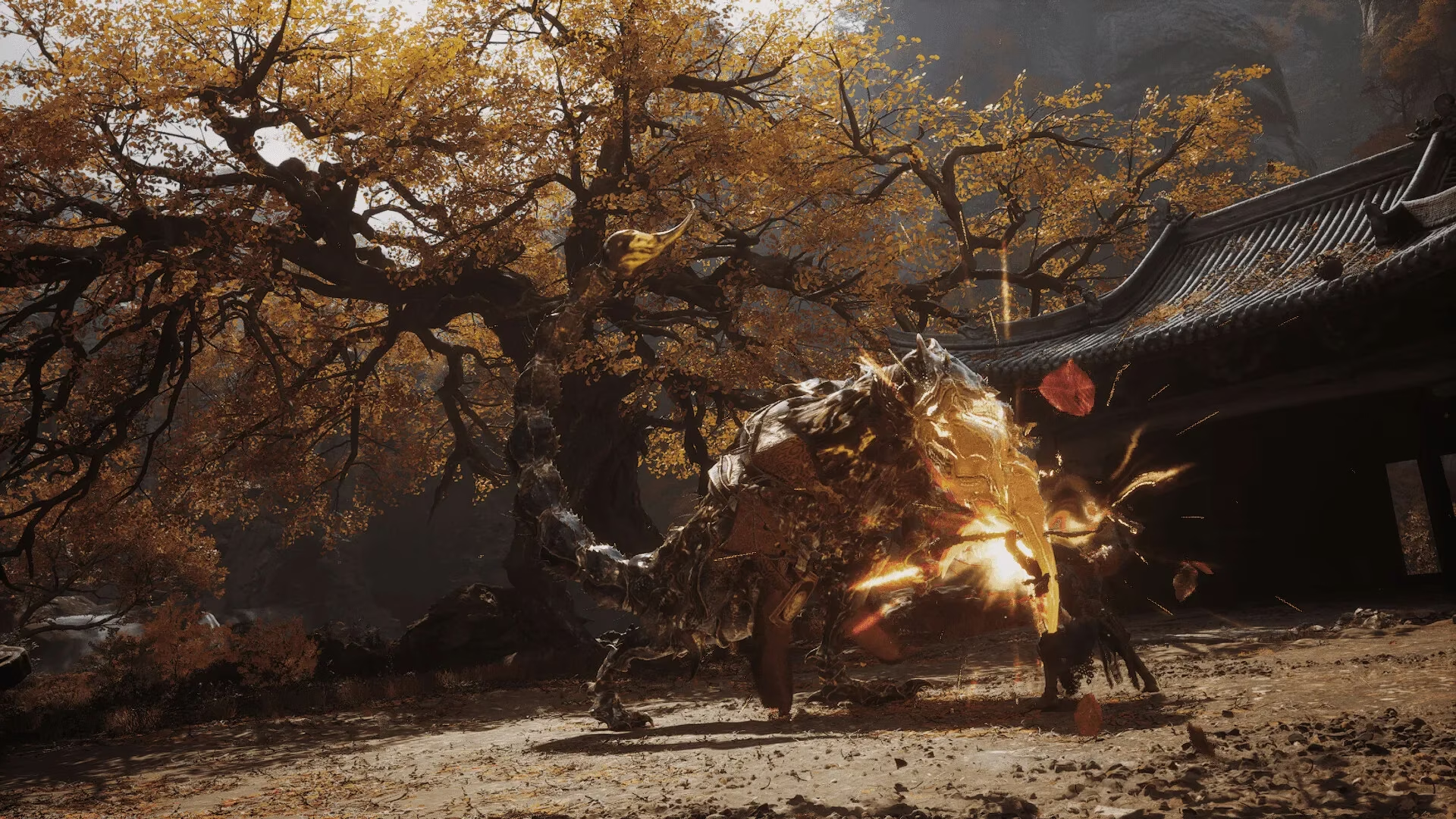
The transformation mechanic is one of the most standout features in Black Myth: Wukong, and it's not something you see very often in Soulslikes. As you defeat certain minibosses and bosses, you can temporarily take on their forms and use their moves and abilities. It's gleefully bombastic and adds a layer of spectacle that feels more like character action than grimdark survival. Trying out an enemy's powers after beating them feels like a reward rather than just another stat stick. I honestly wish more Soulslikes stole this idea.
More Direct Storytelling
Finally, let's talk story. FromSoftware pioneered a cryptic, indirect style of storytelling where players piece together lore from item descriptions and environmental hints. Many Soulslikes have copied that, with varying success. Black Myth: Wukong doesn't play by those rules. It tells its narrative in a much more direct and traditional way, which fits the source material of Journey to the West. You still get a rich world, but you won't need a lore encyclopedia to understand what's happening. For someone like me who enjoys actually following the plot without a companion wiki, that's a welcome shift.
Final Thoughts
So, does all this mean Black Myth: Wukong isn't a Soulslike at all? Not exactly. It shares enough DNA—challenging bosses, dodge-focused combat, checkpoints, and a grim world—to feel familiar. But the differences matter. Faster combat, a more linear world, a single weapon focus, limited progression, more forgiving death, pausing, transformations, and direct storytelling all push it into its own space. If you're a diehard Souls fan looking for exactly that formula, you might feel a bit off-balance. But if you're open to a faster, more guided, and slightly more forgiving action RPG, Black Myth: Wukong might just surprise you. That's what makes it exciting: it borrows the bones of a genre and then dares to break them in ways that feel fresh.
This discussion is informed by reference material and community knowledge hosted on GameFAQs, where player-driven FAQs and Q&A threads often break down how Black Myth: Wukong’s boss-first pacing, mission-like level structure, and mastery-centric staff combat separate it from the slower, build-heavy Soulslike template. That kind of practical, fight-by-fight guidance also reinforces why the game’s lighter death penalty and pause option shift the experience toward learning encounters and experimenting with transformations, rather than emphasizing corpse runs and attrition.