 BlackMythWukongZone
Black Myth: Wukong's Journey from Stop-Motion Hype to Mythic Reality
Black Myth: Wukong masterfully blends Chinese mythology with a compelling soulslike challenge, captivating players through its innovative marketing and stunning visual artistry.
In the landscape of modern gaming, few reveals have been as charmingly unconventional as Game Science Studio's announcement for Black Myth: Wukong. Back in early 2024, amidst the celebrations of the Lunar New Year, the developers shared a whimsical short film that captured the hearts of fans worldwide. It wasn't a standard trailer filled with explosive combat snippets; instead, it featured a stop-motion rabbit, embodying the spirit of the Year of the Rabbit, grappling with the frustration of an outdated computer while trying to install the highly anticipated game. This creative approach not only highlighted the game's impending summer 2024 release but also showcased the team's unique personality and deep connection to Chinese cultural themes. The film cleverly wove in brief, tantalizing glimpses of the game itself—scenes of the legendary Monkey King, Sun Wukong, locked in fierce combat against a formidable tiger-like adversary. This blend of folklore, artistry, and playful marketing set the stage for what would become one of the most significant action RPG launches of the mid-2020s.
From Legend to Digital Epic: The Core of Wukong
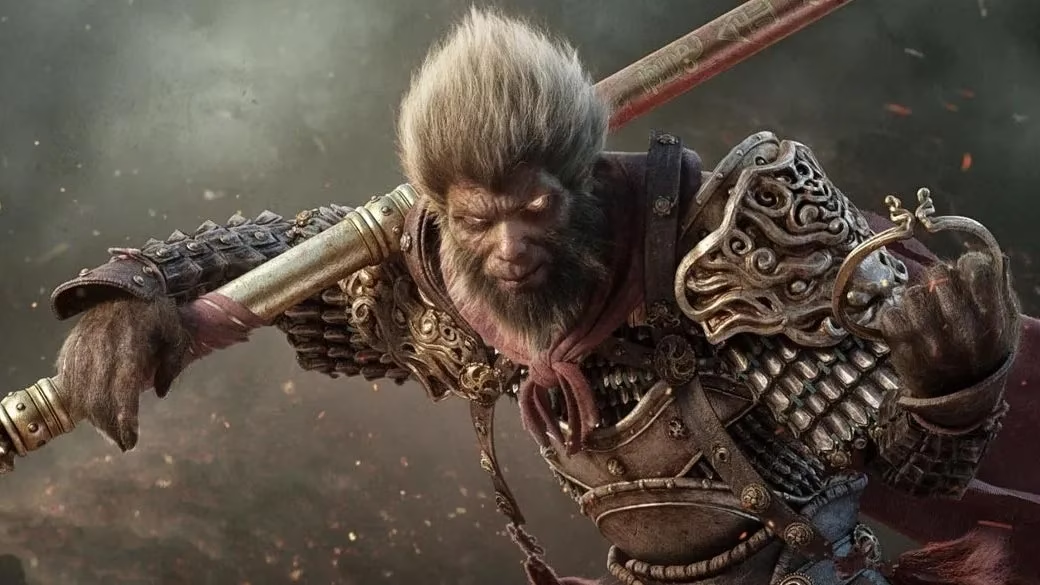
What is it about the tale of the Monkey King that has inspired countless adaptations, and now, a groundbreaking video game? Black Myth: Wukong draws its lifeblood from the 16th-century Chinese classic Journey to the West, one of the Four Great Classical Novels. The game casts players not as mere observers, but as the incarnations of Sun Wukong himself, the rebellious, shapeshifting simian born from stone who seeks immortality and challenges heavenly authority. Game Science Studio, founded by former Tencent developers, embarked on this ambitious project to translate this rich mythology into a visceral, third-person action RPG experience. Remember the initial reveal in 2020? It wasn't just the promise of epic battles that stunned audiences; it was the breathtaking visual fidelity and the hauntingly beautiful, yet terrifying, creature designs. Who could forget the concept art of those gruesome anthropomorphic giant rats? It was a clear statement: this would be a world where myth and nightmare beautifully collide.
The Soulslike Crucible: A New Challenge Forged in the East
When the term "soulslike" is mentioned, certain expectations arise: challenging combat, intricate level design, and a pervasive atmosphere of dread and grandeur. Black Myth: Wukong proudly enters this arena but asks a pivotal question: What happens when this demanding genre is filtered through the lens of ancient Chinese mythology? The answer lies in its combat system. Players master Wukong's iconic Ruyi Jingu Bang, the magical staff that can change size at will, alongside his 72 transformational abilities. Imagine facing a towering, multi-armed Buddhist statue guardian—can you adapt your strategy, perhaps transforming into a tiny insect to evade a crushing blow, or into a giant to meet its power head-on? The game demands more than just reflexive button presses; it requires tactical thinking and a deep understanding of your mythical toolkit. The enemy roster, inspired directly from the bestiary of Chinese folklore, ensures that no two encounters feel the same. From the fiery Samadhi Fire demons to elegant yet deadly celestial maidens, each foe presents a unique puzzle to solve with spell, staff, and transformation.
A World Painted in Myth: Art, Sound, and Atmosphere
Visuals alone do not make a world feel alive. How does Black Myth: Wukong transport players to a realm that feels both authentically ancient and fantastically new? The commitment to artistic integrity is paramount. Landscapes are not just backdrops; they are characters themselves. Players traverse:
-
Floating Mountain Monasteries: Clinging to mist-shrouded peaks, whispering with the chants of forgotten monks.
-
Desolate Battlefields of Heaven: Littered with the broken armor and weapons of celestial conflicts long past.
-
Verdant, Animated Forests: Where every gnarled tree and glowing plant seems to pulse with primordial energy.
The sound design complements this perfectly. The clash of the Jingu Bang against demonic armor, the ambient sounds of mythical creatures, and a score that blends traditional Chinese instruments with epic orchestral sweeps create an immersive audio tapestry. This attention to sensory detail ensures that the journey through Heaven, Earth, and the underworld feels tangible and awe-inspiring.
The Legacy Two Years On: Impact and Evolution
Now, in 2026, looking back at the game's successful launch on PC, PS5, and Xbox Series consoles, its impact is undeniable. Did it merely meet the hype generated by that adorable stop-motion rabbit? For many, it surpassed it. Black Myth: Wukong achieved something rare: it became a cultural touchstone that introduced global audiences to the depth of Chinese mythology through interactive media. It proved that stories rooted in specific cultural traditions have universal appeal when crafted with passion and high technical skill. The game's success has paved the way for further exploration of mythological narratives in AAA gaming, showing that there is a hungry audience for tales beyond the well-trodden paths of Western fantasy and sci-fi. Its challenging yet fair gameplay, combined with its unparalleled artistic vision, has secured its place as a classic in the action RPG genre. The journey of the Monkey King, from ancient text to digital epic, continues to inspire, reminding us that the greatest stories are those that are retold, reimagined, and passionately brought to life for new generations.