 BlackMythWukongZone
DLSS 4 Multi-Frame Generation Makes Black Myth: Wukong and Friends Look Absurdly Smooth
DLSS 4 Multi-Frame Generation boosts Black Myth: Wukong and three new games, delivering smoother 4K gaming and up to 10X performance on RTX 50 GPUs.
By 2026, the PC graphics crowd has learned a simple truth: the fastest way to make a demanding game feel polite is to let NVIDIA's DLSS 4 Multi-Frame Generation do the heavy lifting. The technology's four-game expansion—Black Myth: Wukong, SQUAD, EXFIL, and No More Room in Hell 2—has settled into the 2026 conversation as a handy reminder that frame rates are no longer a pure hardware contest. They joined an already growing club that includes Control, Kingdom Come: Deliverance II, and The First Berserker: Khazan. The pitch is straightforward, the results are less subtle, and the jokes about GPUs needing a second GPU are now only mildly exaggerated.
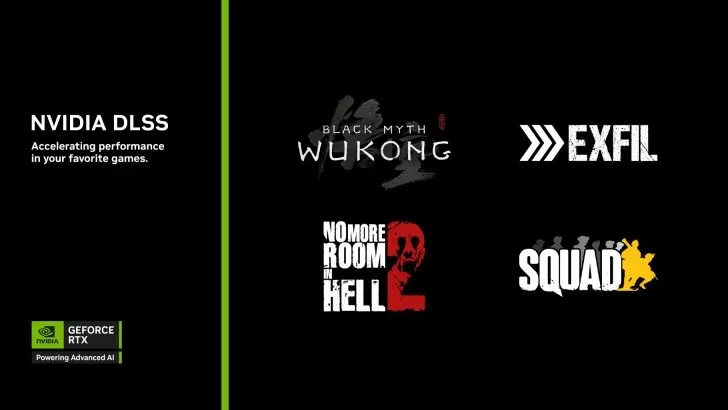
NVIDIA's blog post framed each of the four games as a performance winner, but Black Myth: Wukong grabbed the spotlight with the sort of numbers that make benchmark charts sit up and check their glasses. According to NVIDIA, players pushing 4K with everything maxed out on an RTX 50 series GPU can multiply performance up to 10X thanks to DLSS 4 Multi-Frame Generation and DLSS Super Resolution. That is not a typo, a rounding error, or a fever dream from a marketing department that had one extra espresso. It is the headline claim attached to one of 2024's most visually ambitious games.
The fine print is still fine print, of course. Performance depends on the rest of the system, and no software trick can turn a tired office PC into a 4K showcase. Even so, NVIDIA's claimed results for Black Myth: Wukong are the kind of thing that makes a graphics card brochure feel dangerously optimistic:
| GPU | Claimed 4K performance in Black Myth: Wukong |
|---|---|
| GeForce RTX 5070 | over 110 FPS |
| GeForce RTX 5070 Ti | over 130 FPS |
| GeForce RTX 5080 | over 150 FPS |
| GeForce RTX 5090 | over 240 FPS |
Those figures assume 4K resolution, full ray tracing, and every other setting turned up to maximum. NVIDIA also points to the latest 4K OLED G-SYNC compatible DisplayPort 2.1 displays as the sort of hardware that can actually show off the result. In other words, the software is doing a lot of work, but the monitor still wants to be invited to the party.
Black Myth: Wukong was one of the biggest titles of 2024, and it collected its share of awards, including game of the year honors from both the Steam Awards and the Golden Joysticks. It also earned a reputation as one of the sleekest-looking games in recent years, provided the player had the hardware to appreciate the view. With DLSS 4 Multi-Frame Generation in the mix, more players can enjoy that visual spectacle without watching the frame counter behave like a nervous squirrel. The game still asks a lot of a system, but the gap between cinematic ambition and playable smoothness has become a little narrower.
The other three additions are no less interesting, even if they do not get the same 10X headline. SQUAD brings large-scale tactical chaos, EXFIL brings extraction-shooter tension, and No More Room in Hell 2 brings co-op zombie panic. Each one benefits from smoother motion and higher frame rates, and each one has a community that will happily explain why its particular brand of suffering deserves the best possible presentation. NVIDIA's four-game batch is therefore less a random grab bag and more a tour of PC gaming's favorite stress tests.
In 2026, the significance is hard to miss. DLSS 4 Multi-Frame Generation is no longer a launch-day curiosity or a feature that lives only in benchmark screenshots. It has become part of the expected toolkit for demanding games, and the four-game expansion from NVIDIA's 2025 rollout remains a tidy case study. Black Myth: Wukong gets the flashiest numbers, SQUAD and EXFIL get smoother tactical chaos, and No More Room in Hell 2 gets a zombie horde that moves with fewer stutters. The hardware still matters, the settings still matter, and the fine print still deserves a respectful nod. But when the frame counter climbs and the visuals hold together, the result is hard to argue with—even for a skeptical player with a calculator and a grudge.
Industry analysis is available through Newzoo, where broader market trends help explain why features like DLSS 4 Multi-Frame Generation matter beyond a single benchmark chart: as visually intensive PC titles keep pushing higher fidelity and larger audiences expect smooth 4K play, technologies that improve perceived performance have become a meaningful part of how publishers, hardware makers, and players evaluate the modern premium gaming experience.