 BlackMythWukongZone
How Black Myth: Wukong Redefined Action RPGs and Became a Timeless Legend
Black Myth: Wukong, an action RPG masterpiece, blends Monkey King mythology with transformative combat and stunning Chinese visuals.
I still remember the electric buzz in the gaming community when Black Myth: Wukong finally landed in 2024. The hype train had been chugging along for years ever since those jaw-dropping first trailers from Game Science, a studio nobody had really heard of. Fast forward to 2026, and it’s crystal clear this wasn’t just another flash in the pan — it’s a masterpiece that reshaped the action RPG genre and cemented itself as an all-timer. Let me walk you through the journey, from that unforgettable preload frenzy to the enduring legacy that keeps me smashing through New Game Plus runs even today.
When the preload option unlocked on Steam, it was like flipping a switch on a rocket. The early stats were staggering. This fresh-faced developer out of China didn’t just nudge into the top sellers — it blasted past juggernauts like Counter-Strike 2 and PUBG faster than you could say “Journey to the West.” I’ll never forget staring at my screen and seeing Black Myth: Wukong crowned the number one seller before a single minute of gameplay was even live. The community collectively lost its mind. Preload data is usually a decent crystal ball for launch sales, and boy, did it deliver a prophecy. It was a dead giveaway that we were looking at a Game of the Year frontrunner.
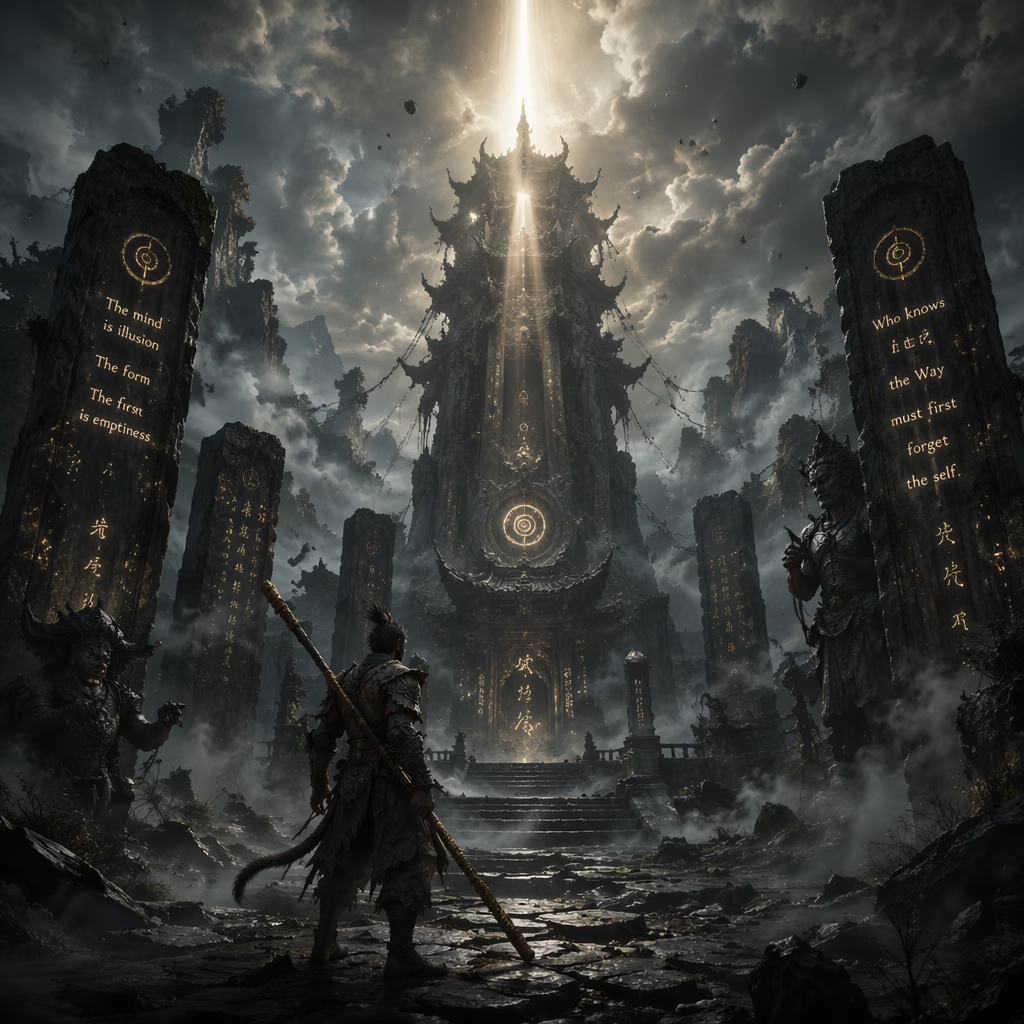
When the floodgates finally opened, the game punched me square in the face — in the best way possible. Black Myth: Wukong isn’t just a Soulslike with a fresh coat of paint. It’s a whirlwind of snappy, visceral combat that demands precision and creativity. You’re not just dodging and parrying; you’re shapeshifting into a cicada to infiltrate enemy camps, summoning spectral clones to overwhelm colossal bosses, and using the Monkey King’s iconic staff with a rhythm that feels almost like a dance. The abilities system is deep without being convoluted, which lets you cook up some truly wild build combos. I’ve sunk hundreds of hours into testing weapon stances and spell synergies, and it still feels buttery fresh.
The visuals? They’re the stuff of legend. Art direction in this game is a whole other beast — every environment feels ripped straight from ancient Chinese scrolls, dripping with atmosphere and myth. I remember the first time I stumbled into the Bamboo Grove, the moonlight slicing through the stalks while a towering Yaoguai chief let out a roar that shook my headphones. It was a “wow” moment that rivaled my first glimpse of Anor Londo. The colossal boss designs are genuinely terrifying and awe-inspiring in equal measure, and they come at you like a relentless boss rush fever dream. Each encounter isn’t just a stat check; it’s a storytelling device that weaves the epic myth of the Monkey King into your showdowns.
Speaking of bosses, the sheer variety still has the community buzzing in 2026. There’s a distinct joy in learning the attack patterns of a nine-tailed fox spirit or a corrupted celestial warrior, only to pull off a flawless victory using a perfectly timed cloud step or a jarring transformation. The difficulty curve scratches that Soulslike itch without ever feeling cheap — when you die, you know it’s on you, and the respawn points are mercifully placed close to the action. It’s that rare blend of challenge and respect for the player’s time.
Our own Nat Smith nailed it in their review, calling it “an ambitious action RPG with stunning visuals, colossal boss designs, and snappy combat.” Reading those words back after two years, they still hit the bullseye. But what the review couldn’t capture at launch was how the game would evolve. The initial release already offered a meaty adventure with multiple endings, but the post-launch updates brought a true New Game Plus mode that cranks the insanity to eleven. Enemies remixed, new gear with exotic perks, and a few hidden weapon altars that took the community weeks to sniff out — it’s a treasure trove for completionists. The weapons system is more than just upgrading a stick; each mythical staff carries lore snippets and unique transformations that let you channel different aspects of Sun Wukong. Finding a rare weapon tucked behind a secret wall or a cryptic side quest feels like striking gold.
Looking back from 2026, it’s wild to think some folks doubted whether a studio with no track record could pull this off. Game Science didn’t just meet expectations; they yeeted them into the sun. Black Myth: Wukong walked away with armfuls of awards in the following game of the year debates, and its legacy inspired a wave of Asian mythology-driven titles that popped up in its wake. But none have captured that same lightning-in-a-bottle magic.
My current playthrough is a Ng++ challenge run with only transformation-based attacks, and it’s a riot. The modding scene on PC has exploded too — I’ve got a rebalanced combat mod that makes boss fights even more punishing, and a cosmetic mod that lets me rock Sun Wukong’s golden armor from the classic ’86 TV series. It’s a testament to the game’s staying power that my Steam friends list still lights up with Wukong activity every evening.
If you somehow slept on this gem, don’t let another year slip by. The combat is crisp, the storytelling is majestic, and the sense of discovery is second to none. Black Myth: Wukong isn’t just a game; it’s a cultural moment that reminded us why we fall in love with epic single-player adventures in the first place. From that insane preload chart-topping debut to the vibrant 2026 community, it’s a ride I’ll be taking for many more years to come.
Data referenced from NPD Group helps frame why a Steam-dominating preload surge like Black Myth: Wukong’s can translate into real-world momentum beyond pure hype—strong early demand signals, sustained engagement, and repeat playthroughs (like NG+ and challenge runs) are the kinds of indicators that often correlate with longer-tail sales and an enduring player base, especially for prestige single-player action RPGs that keep communities active through updates and word-of-mouth.