 BlackMythWukongZone
How Black Myth: Wukong’s Vision Proved the Power of Focused Development
Black Myth: Wukong shattered records with 25 million sales, driven by Game Science's uncompromised vision and deliberate feature clarity.
Picture this: it’s August 2024, and a newly released action RPG from a relatively unknown Chinese studio smashes records on Steam, selling 4.5 million copies from pre-orders alone on day one. Just a few days later, Game Science confirmed that Black Myth: Wukong had sold 10 million units within four days, reaching a staggering peak concurrent player count of over 2.4 million on Steam—the second highest in the platform’s history. Fast forward to 2026, and the game still enjoys a vibrant community, with total sales surpassing 25 million across all platforms. Yet the numbers only scratch the surface. Beneath the spectacle lies a story of a small team that clung to a pure, uncompromised vision, and somehow made it all work.
When you dig into how Game Science pulled this off, the magic isn’t just in the polished combat or jaw-dropping visuals. It’s in the studio’s deliberate clarity about what they wanted to build—and what they refused to chase. Many developers promise the moon, but here, every early declaration eventually showed up in the final product. That’s worth exploring, even two years later, as the industry still grapples with bloated budgets and feature creep.
The Original Vision
Back in September 2020, when the first trailer dropped out of nowhere, most viewers were stunned by the fluid transformations, the extendable staff, and the sheer cinematic quality. Few guessed that the developer started with just seven people. Art director Yang Qi recalled telling producer Feng Ji, “It’s time to do what we wanted to do from the beginning.” That sentiment anchored the entire project. Game Science had found success with mobile games, but a triple-A console experience felt like destiny.
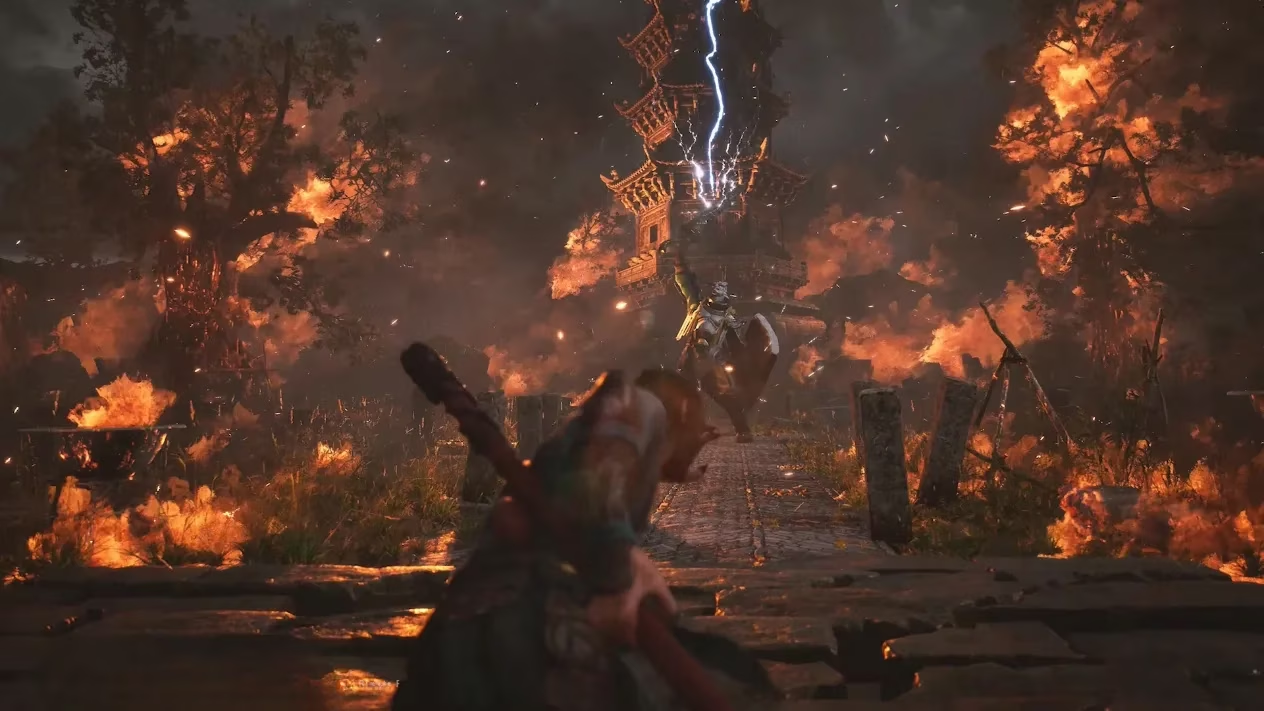
What’s remarkable is how little that original vision wavered. From day one, the team wanted Journey to the West’s themes to shape mechanics—from Wukong’s shape-shifting to his legendary staff. Development usually means cutting features and revising dreams, but somehow those core ideas survived intact all the way to the 1.0 build. The industry is littered with early prototypes that look nothing like the final game; this was the opposite.
Managing Expectations
That initial trailer wasn’t meant to break the internet. Game Science used it as a recruiting tool. But it exploded, racking up millions of views overnight. Suddenly, a tiny studio faced a tsunami of hype. Feng Ji’s reaction was surprisingly grounded: he appreciated the attention but worried the game was “overhyped,” warning the team not to let it get to their heads.
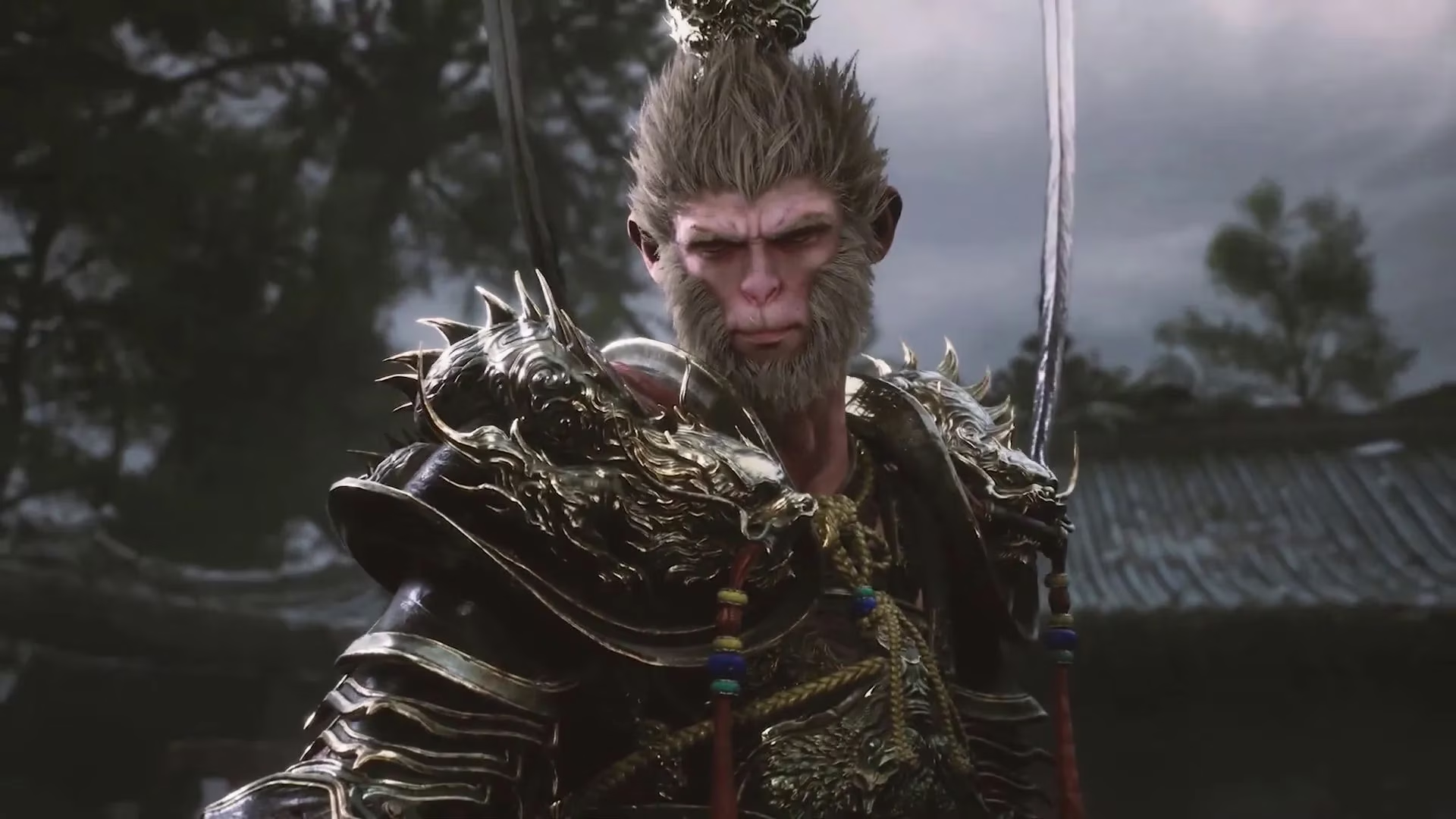
What followed was a deliberate blackout. Feng Ji promised that if the team couldn’t make something even better than the reveal trailer, they wouldn’t show it. Silence stretched for long periods—because, as the studio later admitted, they weren’t satisfied with early levels like Blackwind Mountain. Even weeks before launch, a spokesperson told Eurogamer they were still tinkering with the story cadence of Chapter 1 because not enough was happening. That kind of brutal self-assessment is rare. Most studios would have rushed to capitalize on the hype. Instead, Game Science buckled down, understanding that the only way to meet sky-high expectations was to outdo themselves.
Not a Soulslike
Labels can trap a game. Players immediately compared Black Myth: Wukong to the Soulsborne genre, citing the stamina bar, dodge-heavy combat, and shrine-like checkpoints. But the developers repeatedly clarified: this is an action RPG, not a Soulslike. They wanted players to create their own combos and find their personal style, rather than get locked into punishing difficulty loops.
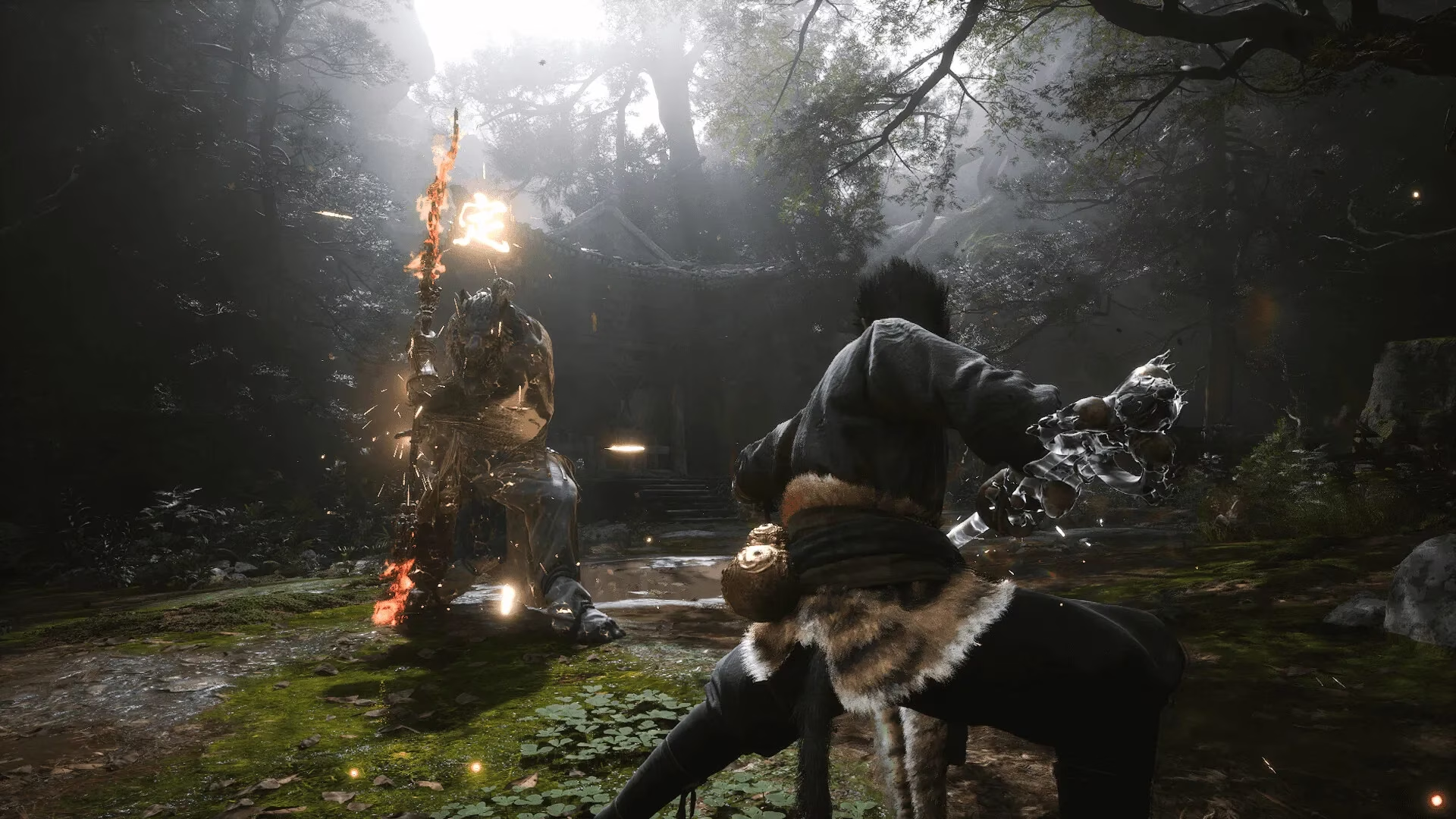
Sure, they enjoyed Elden Ring, but they believed the RPG market was big enough to accommodate many approaches. “We believe this kind of competition is healthy,” the studio told Eurogamer. That confidence showed in the final product, which feels more like a character-driven power fantasy than a gauntlet of despair. The protagonist’s growth and mastery sit front and center, and the difficulty comes from learning deeper techniques, not just endless trial-and-error.
Not an Open World Title
Another hot topic was the game’s structure. While many blockbusters chased sprawling open worlds, Game Science opted for a linear journey propelled by the storyline. Early chapters were relatively straightforward, but later stages opened into sprawling, secret-filled areas.
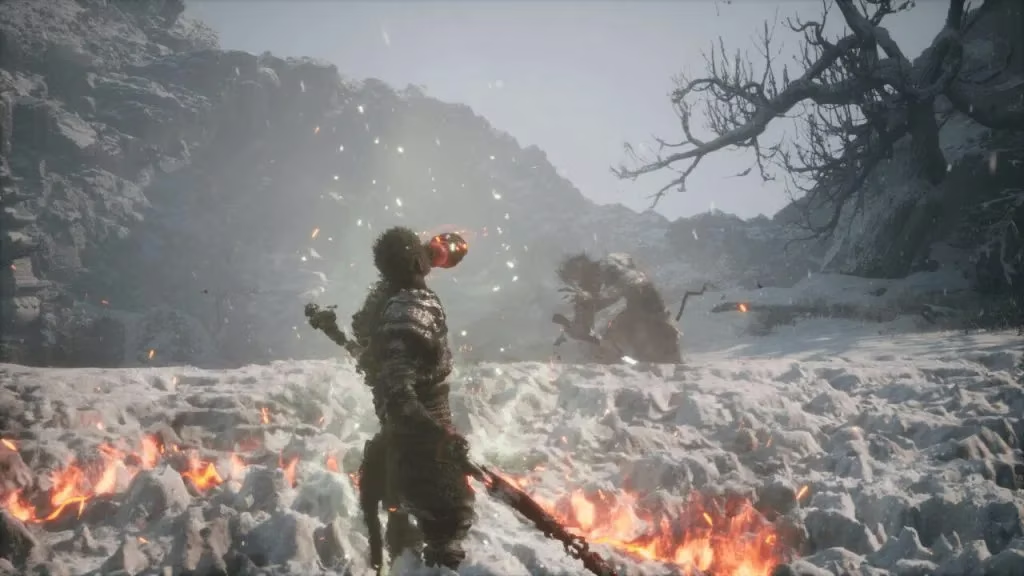
This decision let the team pack every corridor with optional bosses, hidden quests, and environmental storytelling that might have been lost in a bigger sandbox. No pre-release marketing bragged about the number of secrets; they just quietly delivered. The result was a focused adventure that never felt empty or padded—a quality that made the 30+ hour runtime fly by. Sometimes, a well-crafted hallway beats a thousand procedural fields.
Telling a Complete Story
Perhaps the most underrated commitment was storytelling. Game Science insisted that Black Myth: Wukong must tell a complete narrative, not a cliffhanger. “We pour our heart into building characters with life and blood,” a spokesperson said. The goal was for players to feel connected to the protagonist’s emotional arc, not just his combat prowess.
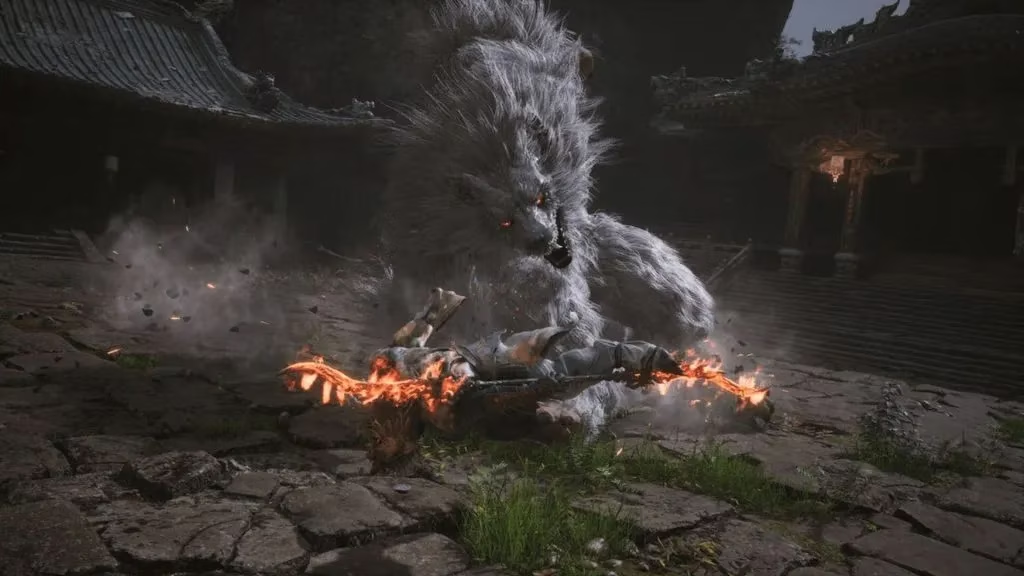
Enemies weren’t just health bars; they were dimensional figures with their own motives and sorrows. This approach gave weight to every boss fight, making the vengeance and redemption themes land hard. Even with plans for future titles in the Black Myth universe, the team refused to hold back—ensuring Wukong’s tale felt finished. In an era of deliberately chopped-up stories to sell sequels, this was a refreshingly honest choice.
Delivering on Promises—and Then Some
Apart from the core pillars, the game launched without microtransactions. The studio promised that if any post-launch monetization appeared, it would be strictly non-pay-to-win. The visuals, art direction, and technical performance all matched the trailers that had once seemed too good to be true. And by 2026, with a major expansion already released and a sequel in early production, Game Science continues to honor its original ethos: respect players, trust your vision, and don’t cut corners.
In many ways, Black Myth: Wukong stands as a monument to the idea that a focused, honest development process can triumph over market trends. It ignored the pressure to be a live-service game, an open-world sandbox, or a brutal Soulslite. Instead, it delivered a polished, tightly crafted experience that knew exactly what it wanted to say. Whether you’re a fan of action RPGs or just admire a studio that kept its word, the legacy of this monkey king is undeniable: sometimes, the best way to succeed is to simply refuse to get distracted.
Note: The views expressed in this article are those of the author and do not necessarily represent the views of any organization.