 BlackMythWukongZone
What a Tri-Fold Phone Taught Me About Cloud Gaming in 2026
Huawei Mate XT Ultimate Design shows tri-fold cloud gaming with Black Myth: Wukong—immersive but reliant on 5G, Wi-Fi, and data limits.
I still remember the first time I saw a fully unfolded tri-fold phone running Black Myth: Wukong. It was a 2024 clip featuring the Huawei Mate XT Ultimate Design, and even now, in 2026, it remains a surprisingly useful reminder of what cloud gaming can and cannot do. Isn’t it strange how a short demo can tell you more about a device’s real personality than a dozen spec sheets?
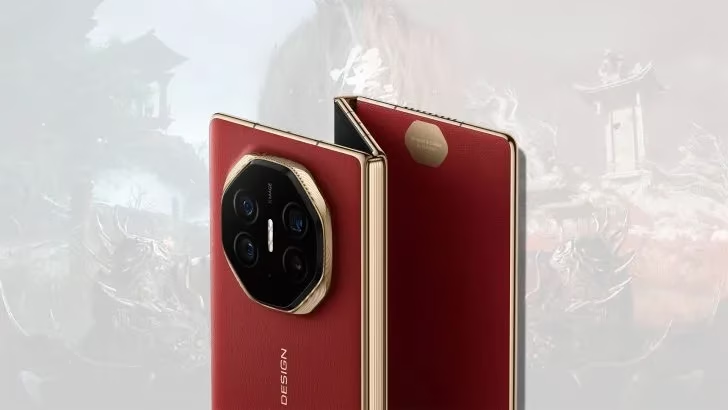
The Mate XT Ultimate Design was the world’s first tri-fold smartphone, and the demo was simple: unfold all three panels, fire up Black Myth: Wukong through Huawei’s cloud servers, and watch a AAA Unreal Engine 5 title stretch across that unusual canvas. I have to admit, the first time I saw it, I thought someone had handed me a tiny tablet. The ceiling lights reflecting on the display gave the game away, though, because you could see a visible crease. If you plan to play like this, dim the lights or accept that your immersive session comes with a shiny reminder that folding screens are still folding screens.
Why cloud gaming, though? Because the phone itself is not running the game natively. Black Myth: Wukong is a visual masterpiece, but that fidelity is expensive. Even the RTX 4090 needs some form of upscaling to run it fluidly, and in our own review, a very capable RTX 4080-powered rig failed to render what I would call a respectable framerate. So expecting a phone to run it natively is like asking a bicycle to tow a truck. The Snapdragon 8 Gen 3 can emulate it, sure, but the result is a slow and blurry mess. Cloud servers do the heavy lifting, and the phone becomes a window.
That window has strings attached, of course. The clip showed that 5G had to be enabled or Black Myth: Wukong would not start. That is a practical detail I cannot ignore in 2026. Cloud gaming can chew through data quickly even at a modest bitrate, so Wi-Fi is your friend unless you enjoy watching your mobile plan evaporate in real time. Who wants to pause a boss fight because of a data cap? Exactly.
What I really liked, and what still feels relevant, is how naturally the title adjusted its aspect ratio based on how many displays were unfolded. That is not a gimmick to me. It is the kind of flexibility that makes a tri-fold feel less like a fragile prototype and more like a genuinely different way to play.
Here is how I would sum up the lesson today:
| Scenario | What it means | My take |
|---|---|---|
| Native phone gaming | Phone hardware runs the game | Fine for mobile titles, not for this AAA monster |
| Emulation | Powerful phone pretends to be a PC | Slow and blurry, as the Snapdragon 8 Gen 3 demo showed |
| Cloud gaming | Remote servers render the game | Works, but 5G, Wi-Fi, and data limits matter |
| Tri-fold display | More screen when unfolded | Great for immersion, but creases and reflections are real |
So do I think the Huawei Mate XT Ultimate Design is a gaming device? Not exactly. I think it is a fascinating showcase. In 2026, cloud gaming is more mature, foldables are more common, and the conversation has moved on, but the core truth from that 2024 demo has not changed: a thin client is only as good as the network and service behind it. The phone can give you the screen, the aspect ratio, and the portability. The cloud has to give you the performance. And your data plan? It gets a vote too. 😄